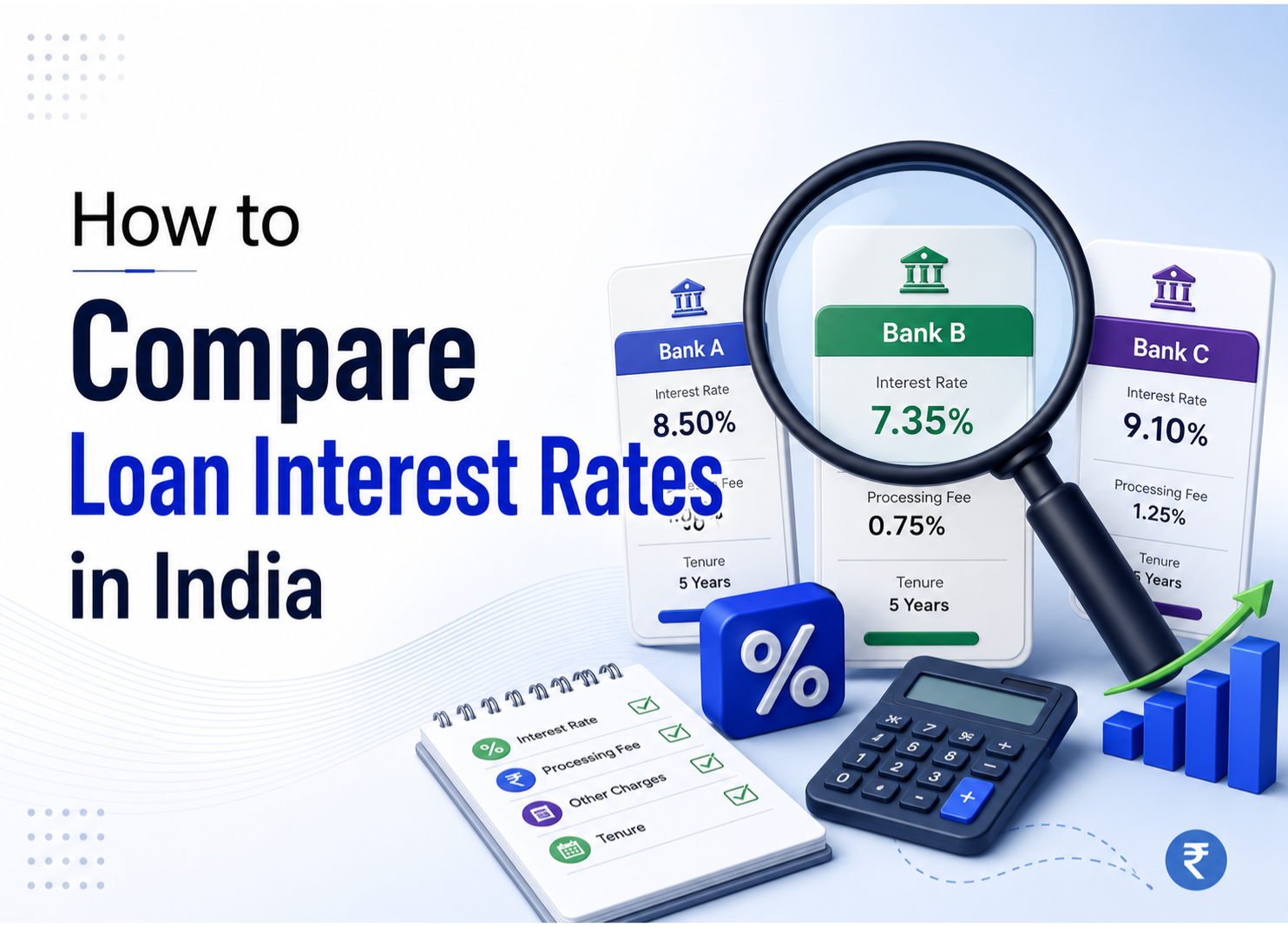
When choosing a loan, approval is important, but it is not the only factor that matters. Comparing loan interest rates in India is one of the most crucial factors. A slight change in the interest rate can make a big difference in what you pay over the years. Comparing loan interest rates, whether it’s for a personal loan, education loan, home loan or business loan, can provide you with the information you need to make a better financial choice.
What is the purpose of comparing interest rates?
An interest rate is the cost of borrowing money from a lender. The higher the interest rate on a loan, the more it will cost the borrower each month and in total. The risk assessment process varies by lender, so different interest rates are applied.
For instance, if the interest rate on a long-term loan is 1% higher, it may cost thousands of rupees in extra interest. That’s why it’s important for borrowers to always shop around before they make a decision.
Verify the Annual Percentage Rate (APR).
Many people only consider the advertised interest rate. However, lenders may also charge processing fees, documentation fees, and other charges. The Annual Percentage Rate (APR) gives a better idea of what it will cost to borrow the money.
One of the most important things to consider when comparing loan interest rates in India is the interest rate and the charges.
Fixed vs Floating Interest Rate
- There are fixed rates or floating rates associated with the loan.
- Fixed-rate loans do not change over the course of the loan term.
- Floating rates can rise or fall depending on market conditions.
When comparing loan interest rates, choose the option that best aligns with your financial goals and risk tolerance. With fixed rates, you have certainty, and with floating rates, you have savings if the interest rates go down.
Compare Repayment Duration
While it might seem appealing to obtain a lower EMI, you will end up paying much more in interest over a longer period. When comparing loan interest rates, also compare the payment periods.
A shorter loan period means overall lower interest, even though monthly payments may be marginally higher.
Take advantage of Online Loan Comparison Tools.
Borrowers can use online comparison platforms to evaluate lenders, eligibility criteria, EMIs, and interest rates in one place. These tools are advantageous because they save time and facilitate the identification of competitive offers.
Shop around for a loan; don’t take the first one that comes along.
Conclusion
Knowing how to compare loan interest rates in India can help you save money and prevent needless financial strain. When looking at all these options, including the APR, term, repayment options, and lender fees, you will be able to make the best decision while borrowing.
Loan Guru offers educational content to empower readers to navigate the world of loans with greater confidence and make informed financial decisions, whether they are planning for the future or exploring lending options.
Frequently Asked Questions (FAQs)
1. Why do loan interest rates vary from one lender to another in India?
Different lenders use their own risk assessment models, operating costs, and lending policies. Factors such as credit score requirements, loan type, and market conditions can cause interest rates to vary.
2. What is the difference between fixed and floating loan interest rates?
Fixed interest rates remain unchanged over the loan tenure, while floating rates vary with market benchmarks and economic conditions.
3. How does loan tenure affect the total interest amount?
A longer loan tenure usually reduces EMI payments but increases the total interest paid over the life of the loan. A shorter tenure often results in lower overall interest costs.
4. Should I compare the EMI or interest rate before choosing a loan?
Both are important. While EMI affects monthly affordability, the interest rate determines the overall borrowing cost. Comparing both provides a complete understanding of the loan.
5. What other hidden charges should I check beyond interest rates?
Check for processing fees, prepayment penalties, foreclosure charges, documentation fees, late payment penalties, and other administrative charges before finalising a loan.